
Autonomous Shipping Is Here
For most of maritime history, the fundamental model of moving cargo across oceans has stayed the same: a crew lives aboard a vessel for weeks at a time, navigating, maintaining, and operating the ship from departure to arrival. That model is now changing, and faster than most people outside the industry realise.
Autonomous maritime technology has moved out of the research lab and into real commercial operation. The question is no longer whether ships will operate with reduced or remote crews, but how quickly, on which routes, and which companies will lead the transition.
From Concept to Reality
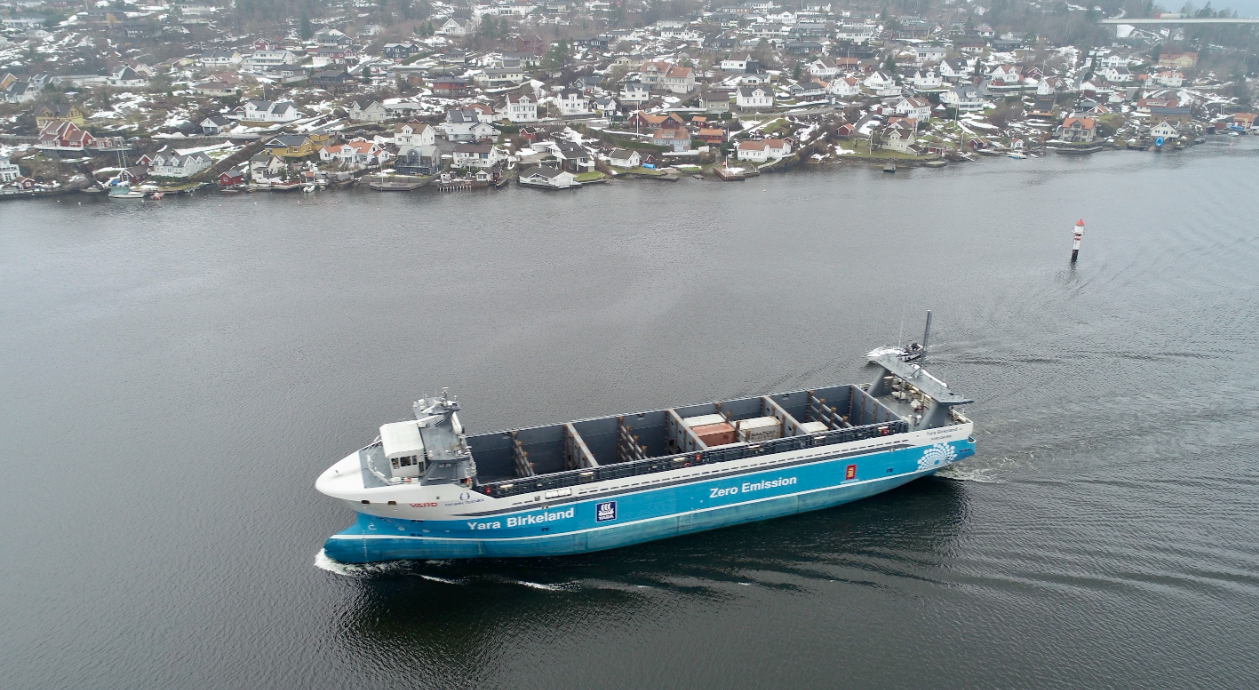
The clearest proof that autonomous shipping is real sits in a Norwegian fjord. The Yara Birkeland, the world’s first autonomous electric container ship, has spent the past several years moving cargo between a fertiliser plant and a port, progressively reducing its crew as the technology has proven itself. It began with a full crew and has steadily wound that number down as confidence in the systems has grown.
It is a small vessel on a short route, but the principle it demonstrates is enormous. A ship can navigate, avoid collisions, dock, and unload with minimal human intervention — and do so safely, repeatedly, and commercially.
Closer to home, Australian technology has shown the same capability at a different scale. Autonomous navigation systems developed in Australia have piloted vessels over hundreds of nautical miles of open water, detecting and avoiding other ships in real conditions, and have earned approval in principle from international classification societies. The technology is no longer speculative. It is certified, demonstrated, and ready for commercial application.
What “Autonomous” Actually Means
It helps to be precise, because “autonomous shipping” covers a spectrum rather than a single thing. The International Maritime Organisation describes four broad degrees of autonomy: ships with automated decision support but full crews aboard; remotely controlled ships that still carry crew; remotely controlled ships with no crew aboard; and fully autonomous ships that make their own operating decisions.
Most near-term commercial activity sits at the first two levels. The realistic picture for the rest of this decade is not crewless ghost ships crossing the Pacific, but vessels carrying far smaller crews, supported by sophisticated AI systems on board and expert teams monitoring from shore-based operations centres. The crew that remains shifts from routine watchkeeping toward maintenance, oversight, and exception handling, while software manages the routine work of navigation and engine monitoring.
The Regulatory Clock
The reason this matters now, rather than in some distant future, is the regulatory timeline. The International Maritime Organisation is finalising its code for Maritime Autonomous Surface Ships, with a non-mandatory version expected first and a mandatory framework targeted to take effect early in the next decade.
That creates a defined runway. The companies that build operational experience during this window — while the technology is proven but the regulations are still maturing — will accumulate years of real-world data, safety records, and operational know-how before the rest of the industry is permitted to begin at scale. In an industry where trust, safety certification, and proven track record are everything, that head start is difficult to overcome.
What It Means for World Trade
Globally, autonomous technology promises to address several of shipping’s most persistent problems at once. The industry faces a structural shortage of qualified seafarers, with the global deficit of ship’s officers projected to run into the tens of thousands. Crew costs are significant and rising. Fuel is the single largest operating expense, and AI-driven route and trim optimisation has already demonstrated meaningful fuel savings in commercial trials. And human error remains a factor in the majority of maritime incidents — an area where consistent, attentive automated systems can genuinely improve safety.
The cumulative effect is a shipping industry that, over the next decade, will become leaner, safer, and more efficient. Lower operating costs eventually flow through to lower freight costs, which matters for every economy that depends on seaborne trade.
What It Means for Australia
For Australia, the implications are particularly significant. Australia is one of the most trade-dependent nations on earth, with the overwhelming majority of its goods moving by sea.
Australia also has two assets that make it an ideal place to lead this transition. The first is geography: an enormous coastline and one of the world’s largest exclusive economic zones, providing extensive domestic waters in which to operate, test, and refine autonomous systems under a single national regulatory authority. The second is technology: a home-grown autonomous maritime sector that is already among the most advanced in the world.
The Transition Has Started
Autonomous shipping is not a prediction. It is already happening, in Norwegian fjords and Australian coastal waters, in classification society approvals and IMO working groups, in the quiet reduction of crew numbers on vessels that have proven they can operate with fewer people aboard.
The shipping industry of 2035 will look fundamentally different from the industry of today. The companies positioning themselves now — building the partnerships, the operational experience, and the regulatory relationships — are the ones that will define it.
For a trading nation that has spent decades watching its merchant fleet decline, that represents a rare opening. The technology that once seemed like a threat to maritime employment may turn out to be the very thing that makes a competitive Australian shipping industry possible again.